


OCTOPATH TRAVELER: CotC
4.5557.00 Reviews
App Specs
- Version
- 4.2.5
- Updated On
- License
- Free
- Downloads
- 500,000+
- Developer
- Exptional Global
- Categories
- Role Playing
- Platform
- Android
Screenshots
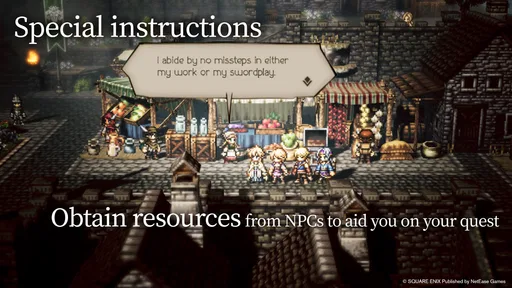
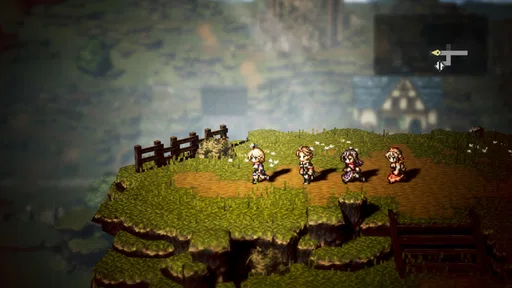
 Analysis by AppCompare
When I first opened OCTOPATH TRAVELER: CotC, I wanted to know two things: whether its striking pixel-art presentation would work on a phone, and whether its turn-based battles could hold my attention beyond a few sessions. It answered both with a clear sense of identity. This is a story-led role-playing game with a deliberate pace, not a quick arcade diversion, and it feels best when I have a little time to follow a scene or think through a fight.
For a first-time player, the reassuring part is that you do not need to understand every system before you begin. I would approach the opening as a guided introduction: take the time to read the battle prompts, follow the current story objective, and treat early encounters as practice rather than a test of perfect team-building. The game has enough strategic depth to reward curiosity, but its core rhythm is easy to grasp once you see how turns and abilities fit together.
What the first sessions feel like
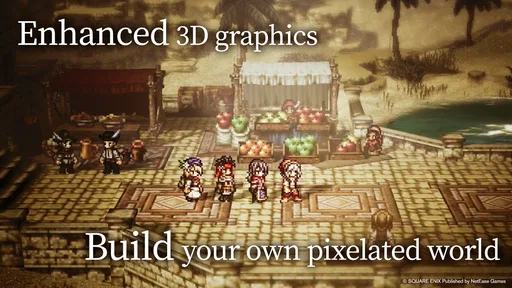
The presentation is the first thing I noticed. Pixel characters sit in carefully composed environments with modern visual effects, giving the world a storybook quality without losing the charm of classic sprite-based RPGs. That style is not just decoration; it gives towns, paths, and battles a consistent visual language. If you like the look of old-school role-playing games but want a more polished screen, this is a particularly appealing middle ground.
The game is free to start, and Exptional Global is the developer. It is a mobile role-playing game, rated Teen, with a 4.7 average from around 18,000 ratings and over 500,000 installs. Those figures make it a well-established option among mobile RPGs, though popularity alone cannot tell you whether its measured pace suits you. The current version is 3.22.6, and it runs on Android 6.0 or later.
Getting oriented without rushing
My practical advice is to follow the main objective until the game has shown you the basic flow, then pause before committing to every side activity you encounter. Early on, it is tempting to click through conversations and move straight to the next fight, but the story context helps explain why you are going somewhere and makes the different character threads easier to follow. A slower first session also gives you a better chance to notice battle instructions instead of having to relearn them later.
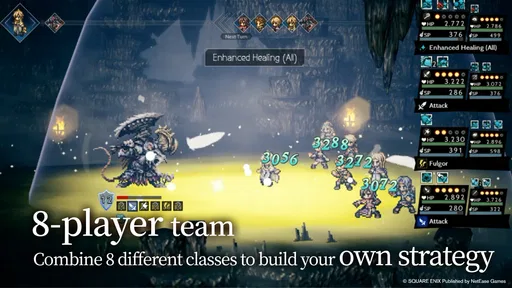
One useful habit is to treat each new enemy encounter as a small puzzle. Pay attention to what the game reveals about an opponent, then use the relevant characters and skills rather than repeating the same action automatically. The Break and Boost mechanics reward planning: a turn spent setting up can make a later attack more effective. I found that thinking one move ahead was more satisfying than simply picking the move with the largest-looking impact.
You do not have to build a supposedly perfect team before enjoying the opening. Try the characters you have, notice which abilities complement one another, and make small adjustments when a battle feels awkward. That gives you a feel for the roster without turning team selection into homework. If a fight catches you off guard, I would first reconsider the timing of your actions and the mix of abilities, rather than assuming you need to spend money or chase an ideal lineup.
Worth Reading Before You Choose

EA SPORTS FC Mobile 26 Is a Bigger Football Game, but It Takes Time

Flipboard Shows What News Apps Must Do Beyond the Feed

Switching to Android Auto Means Rethinking Your Driving Routine

Google Calendar Makes a Crowded Week Easier to Manage

Ludo King Makes the Most of the Minutes Between Plans

Baby Panda World Brings Quick Play to Modern Phones, but Its Game Library Feels Busy
A first satisfying win
The first meaningful success, for me, was not clearing a long chain of content; it was winning a battle because I had paid attention. I watched the enemy, chose actions with a plan, and used the Break and Boost tools deliberately instead of tapping through turns. That small shift made combat feel less like a sequence of menus and more like a tactical exchange. It is a good standard for judging whether the game’s central loop is clicking for you.
That approach also makes short play sessions more rewarding. If I have a spare stretch during the day, I can focus on one objective or a handful of encounters and stop at a natural point. When I have more time, I can stay with a story thread and explore. The game is less suited to moments when I need something instantly entertaining with no reading or attention, because its conversations and strategic battles ask me to be present.
How it fits among mobile RPGs
Compared with action-focused mobile role-playing games, this one asks less of your reflexes and more of your patience and decision-making. That makes it a better choice for someone who enjoys turn-based planning, character stories, and a substantial single-player adventure. If you mainly want real-time movement, rapid combat, or a session that can be played almost entirely by instinct, an action RPG may be a better fit.
It also differs from a traditional console RPG in the way its mobile presentation encourages play in portions. I like that I can make progress without needing to settle in for one uninterrupted marathon, but the trade-off is that a story-heavy game can feel stop-start if I open it only for very brief checks. For the best experience, I would save story scenes for a moment when I can read comfortably and use quick spare minutes for straightforward progress instead.
There is a useful distinction between enjoying the game and trying to optimize everything. Building a team from a broad cast can be a pleasure if you like experimenting, but it can also become a distraction if you spend more time comparing options than playing. I recommend changing one or two team choices at a time and judging the result in battle. That makes it easier to learn what each character contributes, rather than constantly rebuilding around a vague idea of the strongest possible lineup.
The game is a strong match for fans of classic JRPG presentation, thoughtful turn-based combat, and stories told through several character perspectives. It is also approachable for newcomers who are willing to learn systems as they appear. I would steer away from it if you dislike reading dialogue on a small screen, want a purely competitive multiplayer focus, or have little patience for deliberate encounters. Its strengths depend on giving its world and battles room to breathe.
First Impressions
Right off the bat, what caught my eye was the stunning art style. It's got this gorgeous, retro vibe that meshes pixel art with modern 3D effects. The visuals are truly a treat and really set the game apart from other mobile RPGs. OCTOPATH TRAVELER: CotC manages to capture the essence of the original game beautifully. I mean, who doesn't love a game that looks like a piece of art?
The soundtrack is another win. It's both nostalgic and fresh, with orchestral pieces that make you feel like you're on an epic adventure. I found myself humming along as I played, which is always a good sign!
Gameplay Mechanics
Now, let’s talk about the gameplay. The battle system is where OCTOPATH TRAVELER: CotC shines. It's turn-based, so if you're a fan of strategy, you're in for a treat. There's a depth to it that keeps things interesting without overwhelming new players. The "Break" and "Boost" mechanics add layers of strategy, making you think two steps ahead.
One of the coolest features is the ability to recruit and build your team from a wide array of characters. Each character has unique abilities, and mixing and matching them to find the perfect synergy can be quite rewarding. I spent a good chunk of my time experimenting with different team compositions, and it never got old.
Storyline and Characters
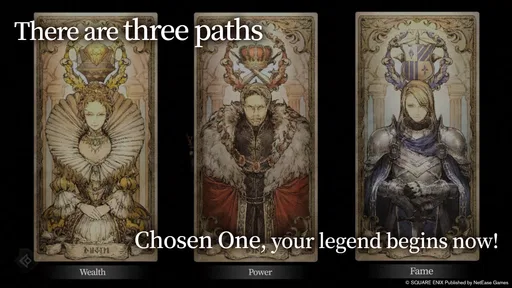
The story in OCTOPATH TRAVELER: CotC is engaging, with multiple narratives weaving together. You start by choosing one of the eight protagonists, each with their own backstory and quests. This approach allows for a personalized experience and a deeper connection with the characters.
Character development is a highlight here. I found myself genuinely invested in their stories, eagerly anticipating each twist and turn. The dialogue is well-written, offering both humor and heart. It's one of those games where you actually care about the characters' fates.
Exploration and Quests
Exploration is a big part of the game, and the world is vast with plenty of secrets to uncover. Side quests are abundant, and they offer a nice break from the main storyline while helping to flesh out the world even more. I found myself getting lost in side quests, which is always a sign of a well-crafted game world.
The cities and dungeons are beautifully designed, each with its own unique flair. The attention to detail is impressive, and it really helps to immerse you in the game. I loved wandering through the towns, chatting with NPCs and discovering hidden treasures.
Spending choices and expectations
Although the game is free, it includes optional in-app purchases ranging from $0.29 to $69.29 per item. I would decide on a personal spending limit before browsing those options, especially if collecting characters or strengthening a roster is part of what keeps you engaged. A purchase can be tempting when you want faster progress, but it is not the same thing as learning the battle system; I would give the free experience a fair trial first and spend only if you are comfortable with the choice.
One point that can confuse newcomers is the difference between having many characters available and needing to use all of them immediately. A large roster invites experimentation, but it does not mean every new arrival must replace a familiar team member. I found it more useful to keep a dependable core and rotate someone in when their abilities seemed relevant. That keeps battles readable while still letting you learn the cast.
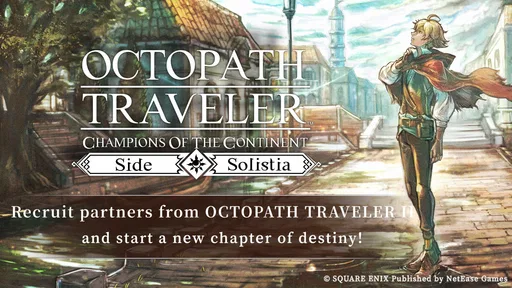
The store currently highlights a DRAGON QUEST III collaboration, which gives returning players a timely reason to look at the game again. For a new player, though, I would not let a collaboration headline dictate the order of play. Start with the basics and see whether the story and turn-based rhythm appeal to you; temporary promotional material is a bonus, not a substitute for enjoying the underlying adventure.
Another practical trade-off is screen attention. The detailed pixel scenes and dialogue are part of the appeal, but they are easier to appreciate when you are not dividing your focus between the game and something else. I would use a commute or waiting room for a short objective only if reading is comfortable, and save important story passages for a quieter moment. That simple choice can make a mobile RPG feel much less fragmented.
There is also a difference between exploring because you are curious and exploring because you feel obliged to clear every available task. The former suits this game: speaking to people, taking a detour, and following a thread can make the setting feel richer. The latter can make a large adventure feel like a checklist. If your available time is limited, prioritize the story path that interests you and let optional activities wait until you genuinely want a change of pace.
For a concrete everyday routine, I would open the game after dinner, continue one story objective, and stop after a battle or scene that feels complete. On a busier day, I might only make a little progress and leave a long conversation for later. This is a better fit than trying to squeeze every system into one sitting, and it reduces the chance that I forget why a character or quest mattered between sessions.
New players often wonder whether they need previous experience with the series. I would not treat familiarity as a requirement: the appeal here comes from its own characters, world, and combat loop, while fans of the console game have an extra reason to appreciate the visual style. Likewise, if you are wondering whether the game is only for people who spend, my recommendation is to begin free and see how the pace feels before considering any purchase.
Monetization and In-App Purchases
On the monetization side, OCTOPATH TRAVELER: CotC is free to play, but it does include in-app purchases. The game is quite generous with its freebies, so you don't feel pressured to spend money to progress. However, if you're impatient or want to speed things up, there are options to do so.
Overall, the monetization is handled well. It's not intrusive, and you can enjoy the game fully without opening your wallet, which is always a plus in my book.
Before installing, I would also check that your phone meets the Android 6.0 minimum and remember that the Teen rating makes this more appropriate for players comfortable with that age guidance. The release date was January 8, 2025, and the current version is 3.22.6. For iPhone users, this review is focused on the Android release details available here, so check the relevant iOS store page for device and version requirements before downloading.
Final Thoughts
In conclusion, OCTOPATH TRAVELER: CotC is a stellar addition to the mobile RPG scene. It brings the magic of the original game to your fingertips, with beautiful visuals, an engaging story, and strategic gameplay. Whether you're a longtime fan or new to the series, there's a lot to love here.
If you're interested in diving into a world full of adventure and intrigue, I highly recommend giving this game a shot. With so much to explore and experience, it's a journey worth taking.
Pros
- Stunning graphics enhance the RPG experience.
- Engaging storyline keeps players hooked.
- Varied characters add depth and strategy.
- Smooth controls for seamless gameplay.
- Regular updates with new content.
Cons
- Can be resource-intensive on older devices.
- In-app purchases can be costly.
- Requires a stable internet connection.
- Limited offline play options.
- Some players may find it too grindy.
FAQs for OCTOPATH TRAVELER: CotC
What is OCTOPATH TRAVELER: CotC about?
OCTOPATH TRAVELER: Champions of the Continent (CotC) is a mobile RPG that offers a rich narrative within the OCTOPATH TRAVELER universe. Players can explore a captivating story set in the world of Orsterra, featuring strategic battles and various characters, each with unique abilities. The game combines classic RPG elements with beautiful, retro-inspired graphics.
Is OCTOPATH TRAVELER: CotC free to play?
Yes, OCTOPATH TRAVELER: CotC is free to download and play. However, it includes optional in-game purchases that can enhance the gaming experience. These purchases might include items, character enhancements, or additional content. Players can enjoy the core game without spending money, though some features may be locked behind these transactions.
What are the system requirements for OCTOPATH TRAVELER: CotC?
For Android devices, OCTOPATH TRAVELER: CotC typically requires Android 7.0 or higher. For iOS, it’s recommended to have iOS 11.0 or later. The game may require a decent amount of storage space due to its detailed graphics and expansive world, so ensure your device has enough free space before downloading.
Does OCTOPATH TRAVELER: CotC require an internet connection?
Yes, OCTOPATH TRAVELER: CotC requires a stable internet connection to play. This is necessary for downloading content updates, participating in online events, and ensuring the game’s features work smoothly. While you can play the game on mobile data, a Wi-Fi connection might be preferable to avoid high data usage.
How does the combat system work in OCTOPATH TRAVELER: CotC?
The combat system in OCTOPATH TRAVELER: CotC is turn-based and strategic. Players select a team of characters, each with unique skills, to face off against enemies. Understanding the strengths and weaknesses of your characters and foes is essential. Strategic planning is key to effectively using Boost Points and Break systems to gain an advantage in battles.


